A clear comparison of NerfAcc and SDFStudio gives a better understanding of how different acceleration tools support modern 3D reconstruction pipelines. Each tool serves a unique purpose inside the neural rendering ecosystem, even though both are widely used for improving speed, quality, and reliability in NeRF-related workflows. A balanced benchmark provides insights into their strengths, their limitations, and the situations where each tool performs best.
Table of Contents
Overview of Both Tools
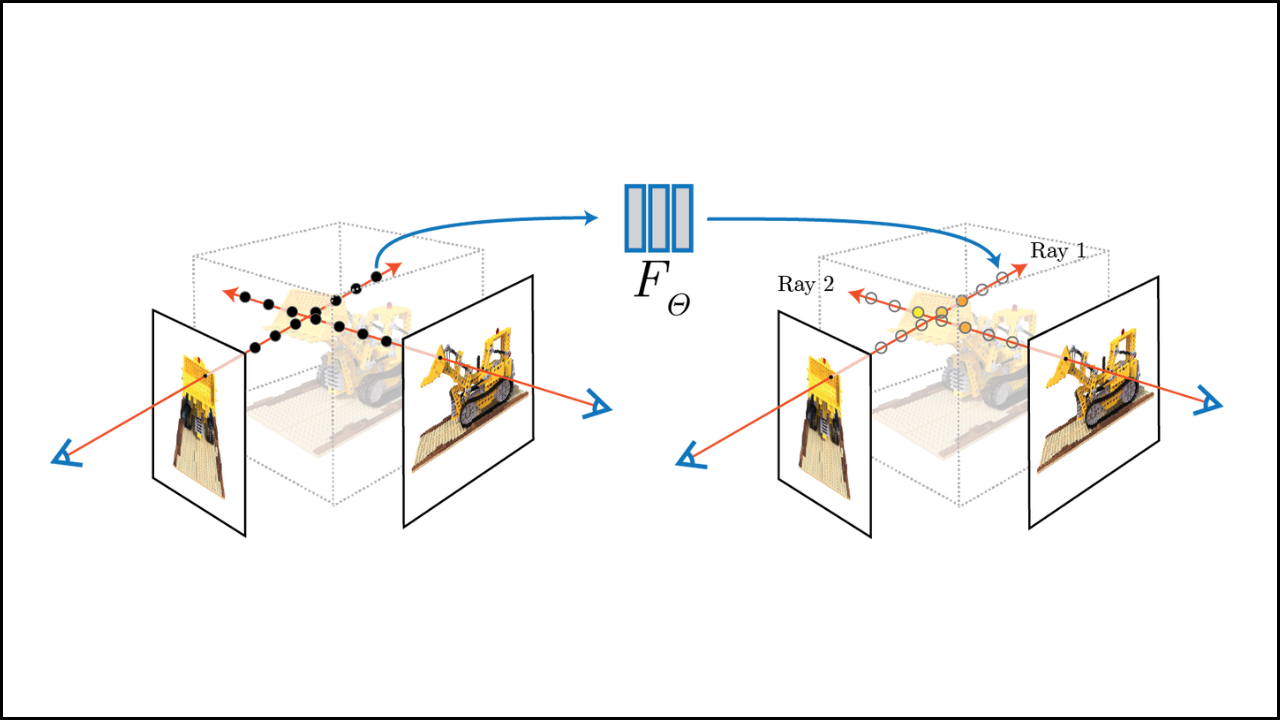
- NerfAcc works as a PyTorch acceleration toolbox created to speed up both NeRF training and inference. The tool focuses on efficient volumetric sampling, reduced wasted computations, and lightweight estimators that help identify useful rays quickly. The design makes it plug-and-play for most NeRF models with only small code changes.
- SDFStudio works as a surface-oriented framework built for implicit-geometry reconstruction. It supports techniques such as SDF-based modeling, NeuS-style rendering, and surface-guided sampling. The framework integrates deeply with the broader nerfstudio ecosystem and is ideal for tasks where accurate mesh extraction and high-quality surface details are required.
Key Benchmarking Categories
- Training speed and time-to-quality
- Rendering performance and frame speed
- Memory usage and VRAM behavior
- Reconstruction accuracy for radiance and geometry
- Flexibility, ease of extension, and coding effort
- Suitability for multi-scene or complex scene pipelines
General Strengths at a Glance
NerfAcc Strengths
- Efficient ray sampling reduces the number of unnecessary MLP evaluations.
- Flexible API allows easy integration with existing NeRF code.
- Significant speed gains during training and inference across different NeRF variants.
- Suitable for experiments where iterative testing and rapid prototyping are required.
SDFStudio Strengths
- High-quality surface reconstruction and detailed geometry recovery.
- Surface-based sampling improves the accuracy of mesh extraction.
- Strong compatibility with SDF-driven losses and surface regularization.
- Useful when both appearance and geometry must meet production-grade standards.
Core Purpose Comparison
| Feature | NerfAcc | SDFStudio |
|---|---|---|
| Primary Design Goal | Fast volumetric sampling and ray marching | High-fidelity surface and geometry reconstruction |
| Underlying Representation | Radiance fields (NeRFs) | Signed Distance Fields and surface-driven models |
| Main Advantage | Speed and efficiency | Surface quality and mesh accuracy |
| Target User | NeRF developers seeking acceleration | Users needing detailed geometry and accurate surfaces |
| Integration Complexity | Low, plug-and-play | Moderate, best with nerfstudio |
Benchmarking Focus Areas
- Training Speed: NerfAcc often reduces training time by decreasing the total number of samples evaluated per ray. SDFStudio may take longer because surface-based models require more precise sampling, but they deliver higher geometric accuracy.
- Rendering Speed: NerfAcc can achieve faster real-time or near-real-time rendering due to fewer required evaluations. SDFStudio’s inference tends to be slower because its models emphasize surface precision.
- Memory Usage: NerfAcc usually uses less VRAM since it minimizes unnecessary volumetric samples. SDFStudio often uses more memory due to SDF networks, additional losses, and mesh-oriented steps.
- Output Quality: NerfAcc provides strong appearance reconstruction and stable view synthesis.
SDFStudio supplies superior mesh extraction, smooth surfaces, and accurate normals.
Observed Practical Trends
| Aspect | NerfAcc | SDFStudio |
|---|---|---|
| Training Duration | Shorter for typical NeRFs | Longer due to surface constraints |
| Rendering Speed | Faster for new viewpoints | Moderate due to SDF evaluation |
| Geometry Accuracy | Moderate | High |
| Ease of Customization | High | Moderate |
| Use Cases | Speed-focused applications | Surface-focused applications |
How to Compare Them Fairly
- Use the same dataset and camera poses.
- Compare “time-to-quality” instead of raw training time.
- Measure samples-per-second to evaluate raw computational efficiency.
- Include geometry metrics if surfaces matter.
- Run tests on identical hardware to avoid GPU variability.
- Keep hyperparameters consistent except for representation-specific ones.
Expected Benchmark Results for Most Workflows
- NerfAcc tends to win in pure speed tests, especially with standard NeRF architectures.
- SDFStudio tends to win in geometry accuracy, producing cleaner meshes and smoother surfaces.
- Combined workflows are possible, such as using a NeRF accelerated with NerfAcc for appearance, then refining geometry using SDFStudio methods.
Scenario-Based Guidance
- Rapid experimentation: NerfAcc is ideal because it requires minimal code change and provides instant acceleration.
- Research focused on geometry: SDFStudio is the better choice because of its SDF-centric sampling and reconstruction pipeline.
- Production environments: A hybrid setup works best, where NerfAcc handles fast appearance modeling and SDFStudio refines geometry for exports.
- Large-scale or multi-scene tasks: NerfAcc’s sampling estimators can scale well, especially with proposal-based sampling strategies.
Scenario Choice Matrix
| Requirement | Best Tool |
|---|---|
| Fast training loops | NerfAcc |
| Real-time or interactive rendering | NerfAcc |
| Highly accurate surface reconstruction | SDFStudio |
| Mesh extraction and surface normals | SDFStudio |
| Minimal code modification | NerfAcc |
| Full pipeline integration | SDFStudio (inside nerfstudio) |
Potential Misunderstandings in Benchmarks
- Faster training does not automatically mean better geometry.
- Surface-based models may appear slower but deliver better structural accuracy.
- Volumetric models can be extremely fast but may require additional post-processing for mesh extraction.
- Differences in batch size or VRAM can distort comparison results if not controlled.
Balanced Perspective
- NerfAcc provides straightforward acceleration and is perfectly suited for radiance-field-only tasks.
- SDFStudio contributes strong geometry and clean surfaces, ideal for reconstruction-heavy workflows.
- Both tools can complement each other, depending on the desired output in a project.
Closing Perspectives
A comprehensive benchmark shows that NerfAcc is the preferred choice when speed, efficiency, and rapid iteration are the main priorities. SDFStudio becomes a stronger tool when surface accuracy, mesh stability, and geometry reconstruction matter more than raw speed. A mixed workflow often delivers the most practical results, especially when both rendering and geometry quality must reach professional standards. The best choice depends entirely on whether your project prioritizes acceleration, surface fidelity, or a strategic balance of both.