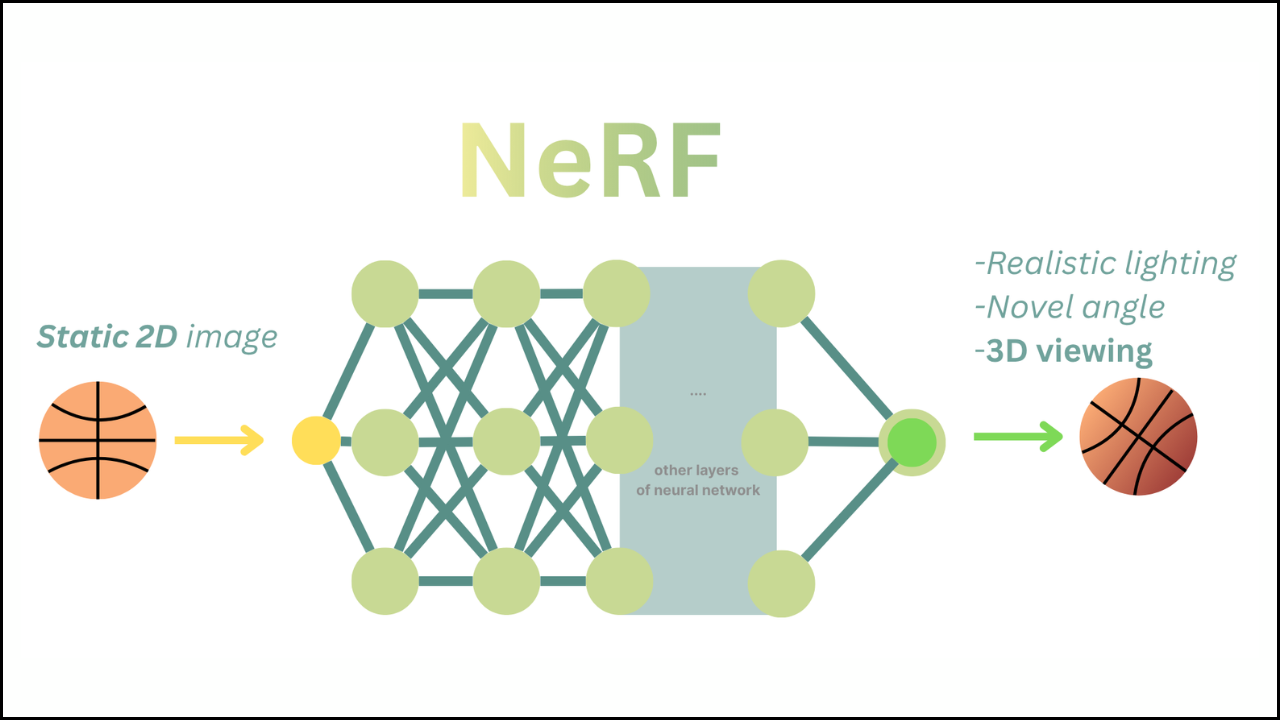
Radiance field research, particularly through Neural Radiance Fields (NeRF), unites computer graphics and computer vision. It allows reconstruction, rendering, and understanding of 3D scenes from 2D images. By combining geometry estimation, photorealistic rendering, and machine learning, radiance fields create models that are both visually accurate and geometrically consistent. This convergence impacts applications in VR/AR, robotics, and autonomous systems.
Table of Contents
Core Concept of Radiance Fields
Concept
Explanation
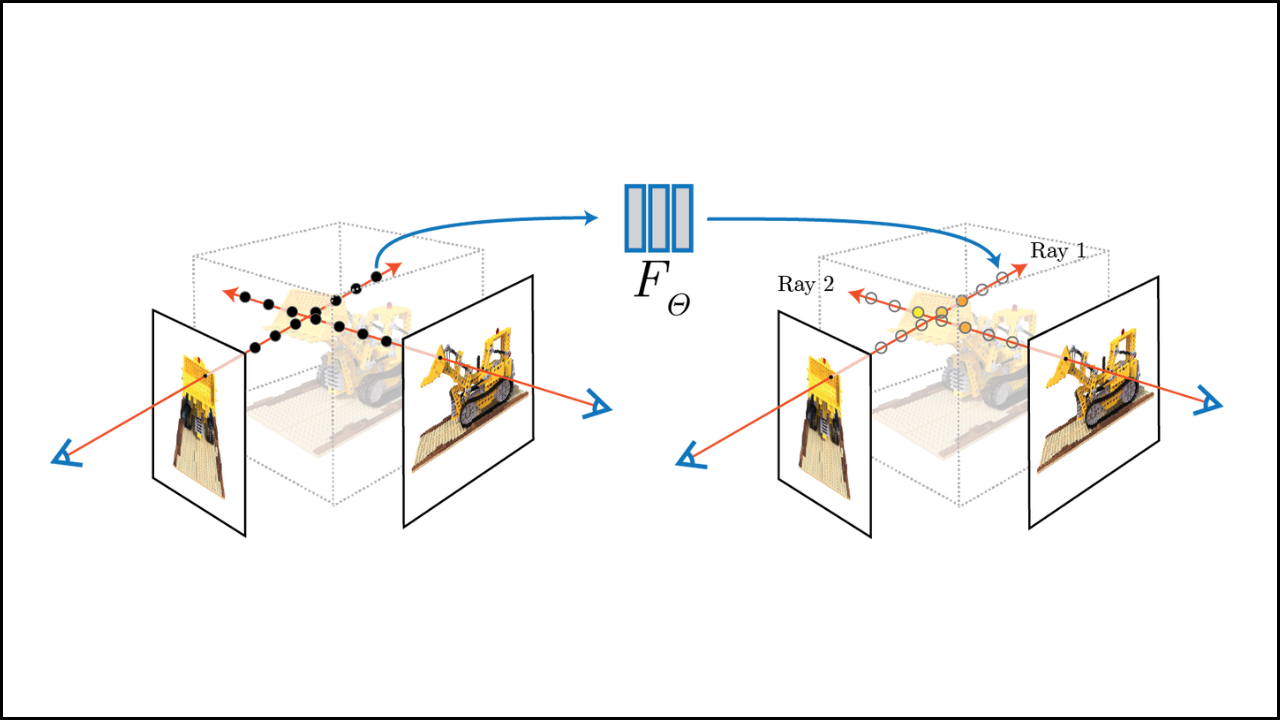
Radiance Field
Represents color and density along each ray in a 3D scene.
Volume Rendering
Integrates radiance along rays to produce 2D images.
Implicit Representation
Encodes scene geometry and appearance in a neural network.
Differentiable Rendering
Allows optimization of neural fields with gradient descent.
Radiance fields encode both visual appearance and 3D structure simultaneously.
Neural networks learn mappings from coordinates and view directions to color and density.
Differentiable volume rendering allows supervision from 2D images without direct 3D measurements.
Bridging Graphics and Vision
Graphics: Focuses on rendering photorealistic images, lighting simulation, and visual fidelity.
Vision: Focuses on understanding geometry, depth, scene layout, and object recognition.
Radiance field research merges these objectives:
Generates novel views with high realism (graphics).
Recovers accurate 3D structure and depth maps (vision).
Learns implicit representations that serve both rendering and recognition tasks.
Applications in Computer Graphics
Application
Benefit of Radiance Fields
Virtual Reality
Immersive environments with realistic lighting and shadows.
Game Development
Efficient creation of 3D worlds from captured 2D images.
Visual Effects (VFX)
Accurate scene reconstruction for compositing and simulation.
Animation
Smooth interpolation between novel viewpoints.
Radiance fields enable realistic light transport and view-dependent effects.
Implicit scene representation reduces manual modeling effort.
Integration with GPU-based rendering pipelines supports interactive visualization.
Applications in Computer Vision
Application
Benefit of Radiance Fields
3D Reconstruction
Recover detailed 3D geometry from multi-view 2D images.
Robotics and Navigation
Scene understanding for autonomous navigation.
Augmented Reality
Accurate placement of virtual objects in real scenes.
Scene Understanding
Depth and normal estimation for semantic reasoning.
Implicit representations allow dense depth and occupancy estimation.
Can work with sparse images for scene completion.
Supports multi-task learning: geometry, appearance, and segmentation simultaneously.
Recent Advances in Bridging Graphics and Vision
Research Direction
Contribution
NeRF-W
Handles uncontrolled lighting and transient objects for real-world scenes.
Mip-NeRF
Reduces aliasing and supports multi-scale rendering.
Instant-NGP
Achieves fast training and real-time rendering.
NeRF++
Handles unbounded outdoor scenes for urban modeling.
Dynamic NeRFs
Incorporates moving objects into reconstruction.
These advances improve realism and generalization to uncontrolled environments.
Speed optimizations enable interactive applications without sacrificing accuracy.
Multi-scale and dynamic models allow vision systems to interpret real-world 3D structure efficiently.
Challenges at the Intersection
Computational Cost: Training NeRFs remains resource-intensive.
Data Requirements: Accurate reconstruction requires multiple views or dense imagery.
Dynamic Scenes: Motion in the scene introduces inconsistencies in radiance fields.
Lighting Variability: Changing illumination affects both reconstruction and rendering quality.
Integration with Existing Pipelines: Bridging graphics engines with vision systems requires careful adaptation.
Best Practices
Precompute rays and optimize sampling for large scenes.
Combine classical multi-view stereo with NeRF for robust geometry initialization.
Use mixed-precision training to reduce GPU memory usage.
Employ regularization and perceptual losses to balance fidelity and geometric accuracy.
Validate reconstructions using both visual inspection and quantitative metrics such as PSNR, SSIM, and Chamfer Distance.
Future Directions
Direction
Potential Impact
Real-Time Radiance Fields
Interactive VR/AR and robotics applications.
Dynamic Scene Handling
Capture moving objects and changing environments.
Hybrid Representations
Combine voxel grids, meshes, and implicit fields for efficiency.
Multi-Modal Learning
Integrate RGB, depth, and semantic information simultaneously.
Hardware Acceleration
Utilize GPUs and specialized hardware for faster inference.
Bridging graphics and vision allows NeRF to serve both synthetic rendering and real-world perception.
Advances in real-time and multi-modal processing will expand practical applications.
Hardware and software co-optimization are critical for deploying radiance fields in robotics and VR/AR systems.
Summing Up
Radiance field research effectively bridges computer graphics and computer vision by providing models that are both visually realistic and geometrically accurate. Applications span virtual reality, gaming, 3D reconstruction, robotics, and scene understanding. Advances in efficiency, multi-view generalization, and dynamic scene handling continue to expand the impact of NeRF and related technologies. By unifying rendering and perception, radiance fields offer a framework for next-generation immersive and intelligent systems.
She is a creative and dedicated content writer who loves turning ideas into clear and engaging stories. She writes blog posts and articles that connect with readers. She ensures every piece of content is well-structured and easy to understand. Her writing helps our brand share useful information and build strong relationships with our audience.