Differentiable rendering is a technique that allows gradients of a rendered image to propagate back to the underlying scene parameters. This approach bridges computer graphics and machine learning, enabling optimization of 3D models, textures, lighting, and camera parameters directly from image observations. Differentiable rendering is central to modern graphics research, powering applications in reconstruction, inverse graphics, and neural scene representations like NeRF.
Table of Contents
Core Concept of Differentiable Rendering
Component
Explanation
Scene Parameters
Includes geometry, texture, lighting, and camera positions.
Rendering Function
Maps scene parameters to a 2D image using graphics pipelines.
Differentiability
Ensures gradients can be computed for optimization.
Loss Function
Measures discrepancy between rendered images and ground truth or target.
Gradients computed through the rendering process enable backpropagation.
Allows learning 3D representations directly from images.
Supports joint optimization of multiple scene attributes simultaneously.
Applications in Graphics Research
Application
Contribution of Differentiable Rendering
Inverse Graphics
Recovers 3D shape, texture, and lighting from images.
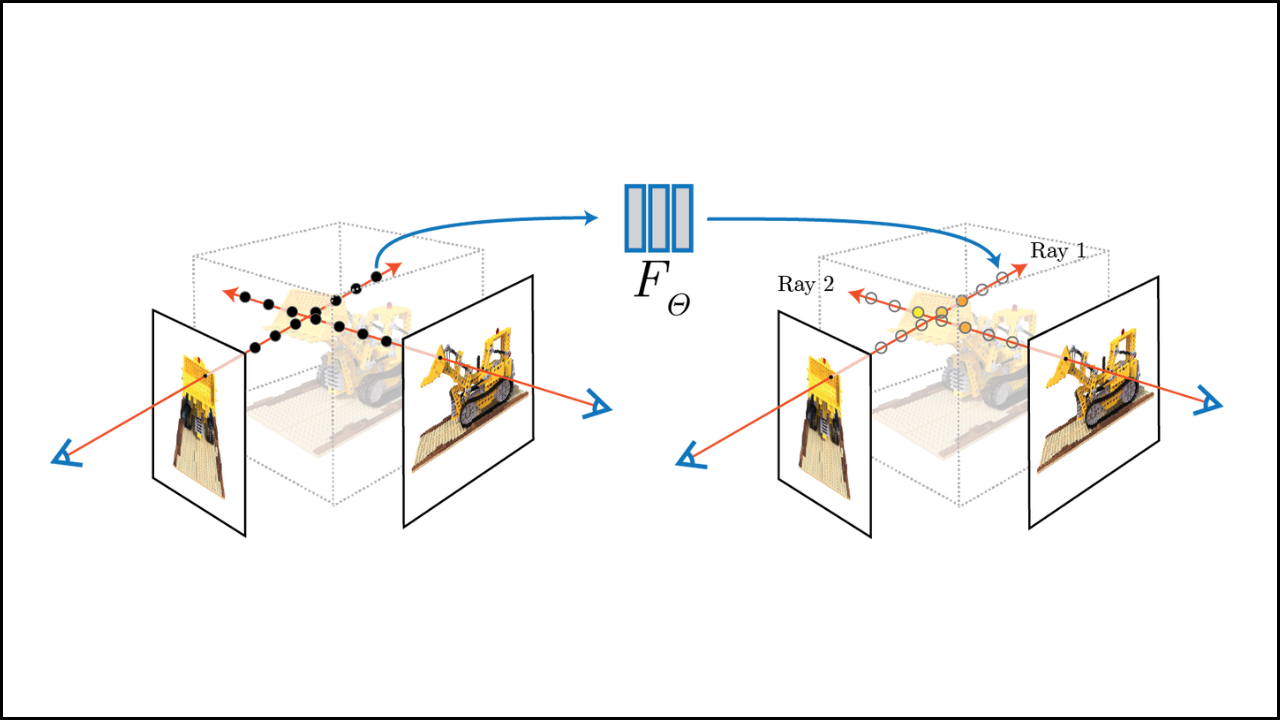
Neural Radiance Fields
Enables optimization of volumetric scene representations using image-based losses.
Material Estimation
Infers BRDF parameters for realistic surface rendering.
Scene Reconstruction
Optimizes geometry and camera parameters from multi-view images.
Light Transport Simulation
Improves physical realism in virtual environments.
Provides a unified framework for learning-based graphics and vision tasks.
Supports gradient-based optimization for both explicit and implicit scene representations.
Facilitates end-to-end training of neural rendering pipelines.
Differentiable Rendering for Neural Scene Representations
Technique
Impact on Neural Rendering
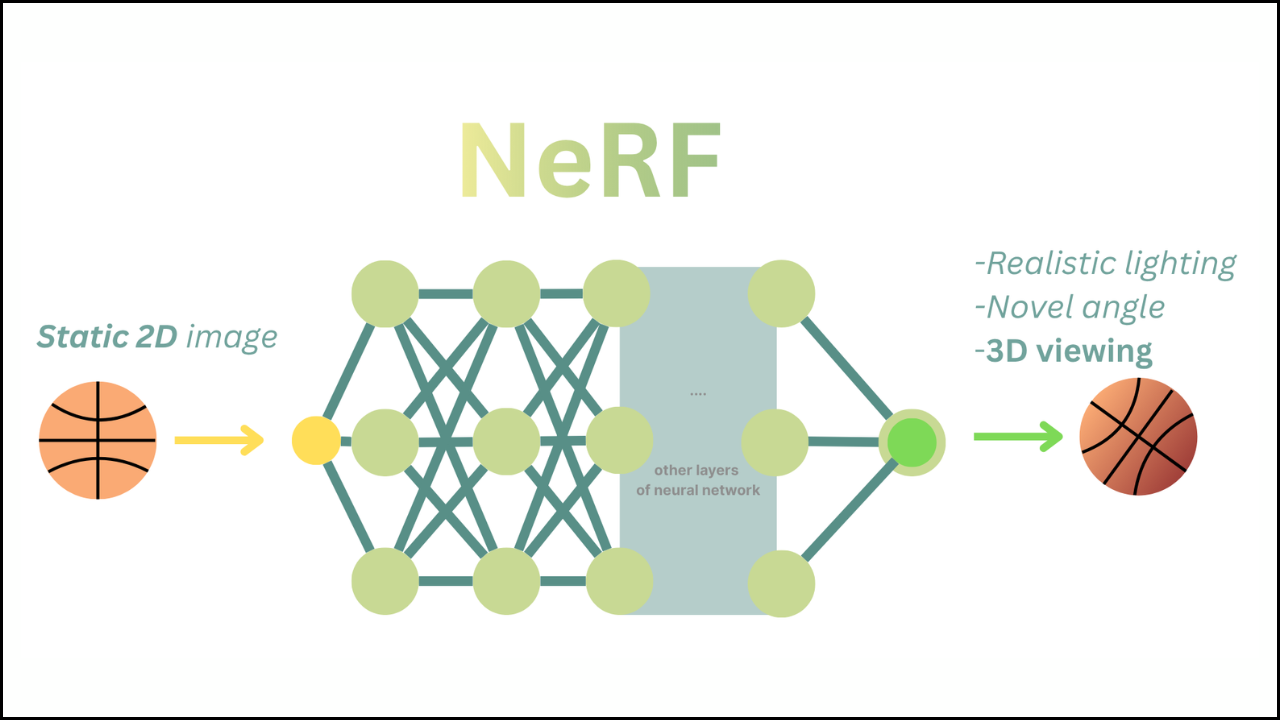
NeRF
Optimizes volumetric color and density using differentiable volume rendering.
Mip-NeRF
Reduces aliasing artifacts with integrated positional encoding.
NeRF-W
Handles varying illumination and transient objects using differentiable optimization.
Dynamic NeRFs
Learns time-varying scenes through differentiable training.
NerfAcc
Accelerates multi-scene and high-resolution training using optimized ray marching.
Differentiable rendering allows gradient-based training directly from images.
Supports both static and dynamic scene modeling.
Enables real-world applications with sparse or unstructured image datasets.
Advantages in Modern Graphics Research
Integrates vision and graphics into a unified optimization framework.
Reduces the need for manual annotation or 3D ground truth data.
Facilitates high-quality, photorealistic rendering from minimal inputs.
Enables rapid prototyping of 3D models and materials.
Provides direct supervision for neural networks in end-to-end pipelines.
Challenges
Challenge
Impact
Computational Cost
Backpropagation through rendering is resource-intensive.
Non-Differentiable Operations
Discrete visibility, shadows, or occlusion can hinder gradient flow.
High-resolution scenes increase memory and computation requirements.
Approximation techniques, such as soft rasterization or Monte Carlo integration, address non-differentiable components.
Hybrid approaches combine classical graphics with neural networks to reduce computational demands.
Best Practices
Precompute visibility and sampling patterns for efficiency.
Apply regularization to avoid overfitting to sparse image observations.
Use mixed-precision training to reduce GPU memory usage.
Combine multi-view images to improve stability and convergence.
Visualize intermediate gradients to ensure optimization is proceeding correctly.
Future Directions
Direction
Potential Impact
Real-Time Differentiable Rendering
Enables interactive editing and optimization of 3D scenes.
Integration with AR/VR
Supports immersive environments with real-time gradient updates.
Hybrid Neural-Physical Models
Combines neural networks with physically-based rendering for realism.
Dynamic Scene Optimization
Handles moving objects and temporal changes efficiently.
Hardware Acceleration
Exploits GPUs and specialized hardware for faster gradient computation.
Future work aims to merge differentiable rendering with real-time applications.
Improvements in algorithms and hardware will expand its use in interactive graphics and vision systems.
Final Thoughts
Differentiable rendering has become a cornerstone of modern graphics research by enabling gradient-based optimization of 3D scene parameters from 2D images. Its integration with neural representations like NeRF allows realistic, photorealistic rendering and accurate geometric reconstruction. Despite challenges in computational cost and dynamic scene handling, differentiable rendering unites computer graphics and vision, paving the way for applications in AR/VR, game development, robotics, and scientific visualization.
She is a creative and dedicated content writer who loves turning ideas into clear and engaging stories. She writes blog posts and articles that connect with readers. She ensures every piece of content is well-structured and easy to understand. Her writing helps our brand share useful information and build strong relationships with our audience.