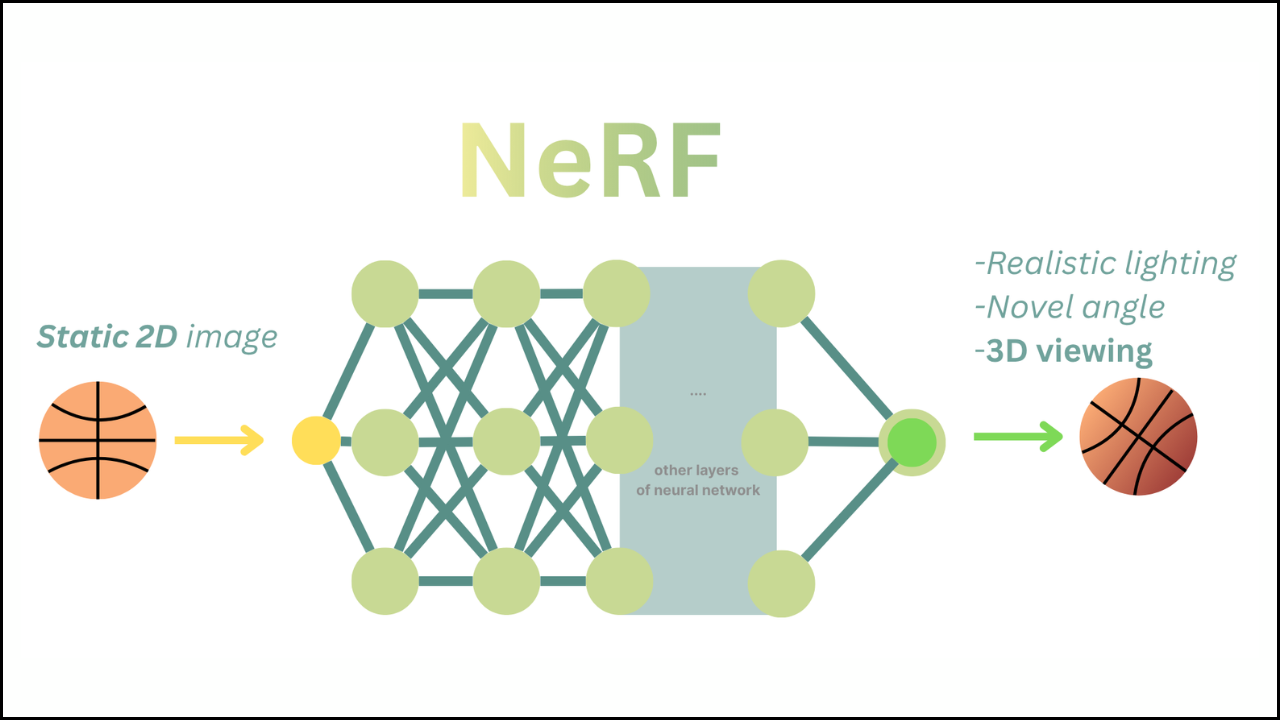
Neural Radiance Fields (NeRF) have revolutionized 3D scene reconstruction and novel view synthesis. Since the original NeRF paper, numerous research works have extended its capabilities, improving speed, scalability, multi-view generalization, and integration with real-world applications. Understanding these key papers helps researchers and practitioners identify trends and best practices in NeRF development.
Table of Contents
1. NeRF: Representing Scenes as Neural Radiance Fields (2020)
Authors
Contribution
Mildenhall et al.
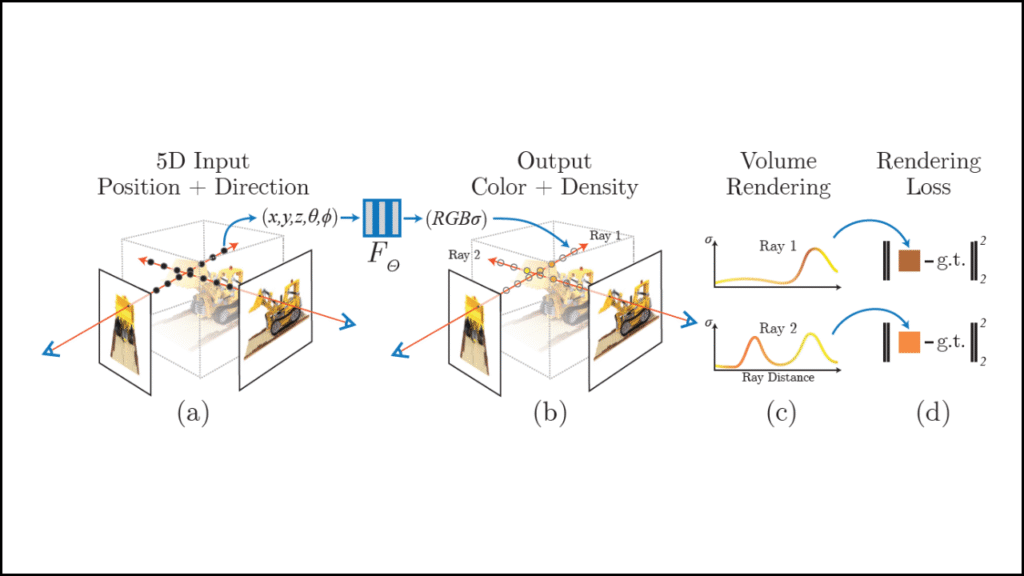
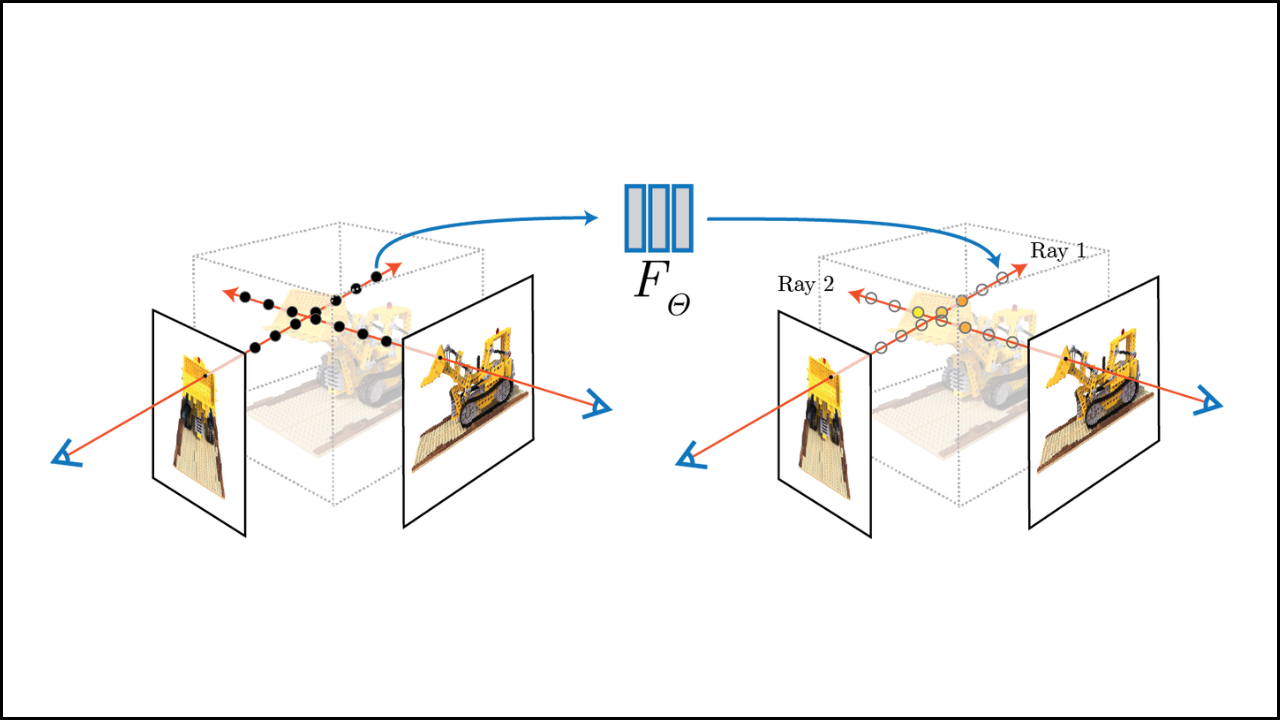
Introduced the original NeRF framework for synthesizing novel views using multi-layer perceptrons to model color and density along rays.
Laid the foundation for volumetric rendering from 2D images.
Demonstrated high-fidelity reconstruction of static scenes.
Introduced differentiable volume rendering as a core concept.
2. NeRF-W: Neural Radiance Fields in the Wild (2021)
Authors
Contribution
Martin-Brualla et al.
Extended NeRF for unstructured internet photos with varying illumination and transient objects.
Added transient and appearance embeddings for robust scene modeling.
Handled lighting and occlusion variations in uncontrolled environments.
Enabled real-world applications like historical photo reconstruction.
3. FastNeRF: Accelerating NeRF Training and Rendering (2021)
Authors
Contribution
Garbin et al.
Introduced hierarchical voxel and network splitting to reduce rendering time.
Achieved real-time or near-real-time rendering.
Reduced computational overhead while maintaining high visual fidelity.
Facilitated integration with interactive applications like VR.
4. NSVF: Neural Sparse Voxel Fields (2021)
Authors
Contribution
Liu et al.
Represented scenes using sparse voxel grids combined with neural networks.
Reduced memory requirements compared to dense NeRFs.
Improved rendering speed and scalability for large-scale scenes.
Maintained quality while enabling efficient ray sampling.
5. PlenOctrees: Fast Training and Rendering of Neural Radiance Fields (2021)
Authors
Contribution
Yu et al.
Combined octrees with neural networks to precompute radiance values for fast rendering.
Achieved near real-time inference for interactive applications.
Maintained high-resolution rendering with reduced computation.
Provided an efficient hybrid between explicit and implicit representations.
Introduced hash-based encoding and multiresolution grids for extremely fast training and rendering.
Achieved real-time NeRF training on a single GPU.
Reduced memory footprint without sacrificing quality.
Paved the way for interactive research and deployment.
10. NerfAcc: Accelerated NeRF Training (2023)
Authors
Contribution
Yu et al.
Provided CUDA-optimized sampling and hierarchical ray marching to accelerate NeRF training.
Improved multi-scene and high-resolution NeRF performance.
Integrated seamlessly with PyTorch DataLoaders.
Enabled faster experimentation and deployment in VR and gaming pipelines.
Common Trends and Observations
Speed optimization through voxelization, octrees, and hash grids.
Handling real-world variations like lighting, motion, and occlusions.
Multi-scale and anti-aliasing techniques for high-fidelity rendering.
Scalability to large, complex, or outdoor scenes.
Integration with real-time applications for VR, AR, and gaming.
Future Implications
The evolution of NeRF technology demonstrates a steady focus on speed, scalability, and realism. From the original NeRF framework to NeRF-W, Instant-NGP, and NerfAcc, research has addressed computational efficiency, real-world variability, and large-scale scene modeling. These top ten papers have collectively enabled practical applications in architecture, gaming, virtual reality, and cultural preservation, shaping the future of neural scene representation.
She is a creative and dedicated content writer who loves turning ideas into clear and engaging stories. She writes blog posts and articles that connect with readers. She ensures every piece of content is well-structured and easy to understand. Her writing helps our brand share useful information and build strong relationships with our audience.